MUSIC REVIEW BY Olivia Peevas, Jazz Blues European Union (Interview)
Jazz Blues European Union: - Thank you for taking the time to have this interview with Jazz Blues EU. Tell us about your music. When did you start performing?
Anthony Branker: - My involvement with music started as a trumpet player when I was 10 years old. In all honesty, I really wanted to play drums at first but was persuaded by two of my friends who already played trumpet that this was the "cool instrument." So, it was because of peer pressure that I started on trumpet in the 5th grade (lol). From 5th to 12th grade, I played in various school ensembles such as concert band, wind ensemble, jazz ensemble, orchestra, and marching band.
When I was a senior in high school I was given the chance to write my first composition for a recital connected with the advanced music theory class that our band director Mr. Bruce Bradshaw taught. I wasn't enrolled in the course but Mr. Bradshaw knew how serious I was about jazz at the time and really encouraged me to write something that certain members of the class would perform. So, I came up with a jazz composition for quintet titled "Like a Mug," which was a colloquialism we used to use back in the day. It was actually a modal composition that I sort of stumbled into because I didn't really know what modality was at the time...it was just something I heard harmonically and it felt right to me.
After high school, I went to Princeton University to study mathematics but always hoped I could convince my parents to let me switch my major to music. I did all the preliminary course work necessary to major in either math or music and was able to persuade them at the end of my sophomore year that there was more to music than just the challenging life of a gigging musician. I let them know I was very interested in composing, conducting, doing research, and teaching, which convinced them that I was both mindful of what it would take to have a career in music and that I was passionate about the field.
While a student at Princeton I had the wonderful opportunity to perform in a campus band ("Timepiece") with guitarist and fellow undergraduate Stanley Jordan. He was featured on my first-ever record titled, For the Children, which was my independent senior thesis project as a music major (I think this was Stanley's first record date as well). I composed and arranged all the music for jazz small group; performed on it and produced it; engaged a graphic artist and photographer to work on the album cover design; worked in the studio with the engineer on mixing, old school editing (splicing tape), and post-production; and was responsible for selling the record - almost all of things that would become central to my musical life with most of the albums I have been involved with over the years. The For the Children album was later reissued by Sons of Sound Records in 2006 in digital format and by Guersen Records in Spain in 2018 as an LP.
What do you consider to be your hometown and how does that affect your music?
I was raised in Piscataway and Plainfield, New Jersey, but grew up in a West Indian American household during the 60s and 70s (my parents were originally from Trinidad), so there were a lot of different types of music that I was exposed to because of culture and the time period. I remember listening to such artists and groups as The Mighty Sparrow, Lord Kitchener; Diana Ross and the Supremes; The Temptations; James Brown; Aretha Franklin; The Jackson Five; Marvin Gaye; Earth, Wind & Fire; Stevie Wonder; Parliament Funkadelic; as well as the group Chicago into my teenage years.
What performers have been your inspiration?
When I was a sophomore in high school, I went to my first live jazz concert featuring the Maynard Ferguson Big Band when they were playing straight-ahead jazz and swingin' hard!! The music they played that night was largely from the album M.F. Horn 4 & 5 Live at Jimmy's. I was absolutely amazed by the spirit, precision, and passion that the band played with!! They had a killin' trumpet section and each of them was a great soloist. That's when I became more focused in my jazz listening habits and truly dedicated myself to learning as much about the music as possible.
When I really started listening to jazz recordings, it was mostly to trumpeters Miles Davis, Freddie Hubbard, and Woody Shaw. Those were definitely my "Big Three." From there my love for the music grew exponentially. I would have to say that Miles was probably my biggest influence when I was coming up. I was simply taken by the way he told stories in his improvisations and I loved his sense of lyricism, which was always accentuated by his beautiful, rich sound. Whenever I get a chance to turn kids on to the music, the album I always say they should check out is Kind of Blue. Later on, I was also checking out Wayne Shorter, Art Blakey & The Jazz Messengers, Duke Ellington, Charlie Parker, and John Coltrane to name a few.
What do you find most challenging about being an independent artist in today's music industry?
Developing a presence and finding your audience in a highly competitive industry that doesn't always value music that reflects creative thinking or thinking outside the box. There is also quite a bit of non-music related work that you have to do as an individual in order to promote your music and sustain your career as a creative artist.
What do you base your success on?
I think the word "success" can mean different things to different people and "context" is always important when discussing this. For me, success can be measured by having the opportunity to do what you love to do every day of your life. My 41 years to-date as an educator and my work as a scholar has filled me with tremendous pride and I would like to believe that I have made some small measure of difference in the lives of my former students. As a composer/bandleader, I have been extremely fortunate to be able to create new music and have it documented by world-class artists that have been kind enough to work with me over the past 22+ years. To my mind, I have been blessed beyond measure and that is what has made these accomplishments in my life possible.
Can you talk about your experiences with other artists or musicians? How does it influence your creative process?
This has been the most uplifting and musically transformative experience I have encountered. After my illness and brain surgery in 2000, I essentially gave up trumpet playing and concentrated more on composing and conducting. I also wanted to have some kind of group as a creative outlet for my writing, so I established the group "Ascent" in 2004 with the idea of bringing together musicians with diverse backgrounds and musical personalities, write for them, and collaborate on various projects.
That collective recorded four albums, the first being the Spirit Songs album with Ralph Peterson, Jr., Antonio Hart, Ralph Bowen, Clifford Adams, Jr., Jonny King, and John Benitez. This period was the beginning of a dedicated move into the space of being a composer/bandleader, which, despite the circumstances that led me there, was where I was supposed to be.
The next collective I was writing for was known as "Word Play" (they recorded the albums Dialogic, Uppity, and The Forward (Towards Equality) Suite on Origin Records). This ensemble came about as a result of me wanting to have a group of musicians that would allow me to explore another aspect of my approach to writing, one that was grounded in free exploration and took more advantage of the notion of conversational interplay. While in some instances I might present more prescriptive compositional settings, I still greatly value this notion of musical exploration on the bandstand through risk-taking and conversational interaction, where the musicians have the freedom to interpret and take the music where "they" hear it going in the moment. Some of the artists I worked with in this group included David Binney, Ralph Bowen, Andy Hunter, Alison Crockett, Adam Cruz, Kenny Davis, Jim Ridl, and Donald Edwards.
For me, the choice of "Imagine" as the ensemble name for my third group was related to the idea that when we engage our imaginations, we allow ourselves to reach beyond and, as educational philosopher Maxine Greene has stated, "look at things as if they could be otherwise." In doing so, we can now begin enjoy and appreciate what our original preconceptions had once closed off to us. No longer bound to those characteristic ways of thinking, feeling, perceiving, and knowing, we are now encouraged to embark on a journey to explore and, in the process, gain a deeper understanding through our encounters with the unexpected. While traveling in this way, we search for openings, for new paths, for breakthroughs so that we can escape from the kind of thinking and practices that tend to be inflexible and complete. We can now begin to "imagine the possibilities." But none of this can take place unless we are "open" to embracing other ways of knowing and experiencing, which brings us to the group of the same name that I am now composing for and leading.
What was your latest musical release?
Back in 2024, Origin Records released Songs My Mom Liked by Anthony Branker & Imagine, which was a celebration of the life and resilience of my then 89-year-old mother, Joan Branker who had been mightily challenged by the ongoing cognitive decline of dementia. I'm so happy that she had a chance to hear this recording because she passed away five months after it was released. It was conceptualized after witnessing how Mom's face would brighten and her body would start to move when listening to my earlier music during our car rides together. For this album, I wanted to re-imagine 11 of these compositions, along with the piece "If...," which was written by my daughter Parris twenty years ago when she was 11. I remain forever grateful to this collection of great artists that included saxophonist Donny McCaslin, trumpeter Philip Dizack, pianist Fabian Almazan, bassist Linda May Han Oh, drummer Rudy Royston, guitarist Pete McCann, and vocalist Aubrey Johnson for bringing their brilliant performances and deep soulfulness to this important recording.
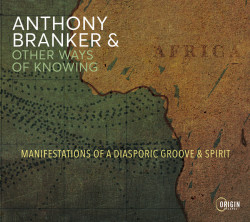
Do you have any news to share? Could you share the story behind your latest new CD ANTHONY BRANKER - Manifestations of a Diasporic Groove & Spirit and what inspired its creation?
This will be my 11th project for Origin which will be released on March 20. Manifestations of a Diasporic Groove & Spirit unveils a new chapter in my ongoing exploration of music as cultural narrative, social inquiry, and collective expression. For this recording, I am leading my newly formed ensemble "Other Ways of Knowing," which brings together an exceptional group of world-class improvisers that include saxophonist Steve Wilson, guitarist Pete McCann, pianist Simona Premazzi, bassist John Hébert, drummer Rudy Royston, and vocalist Aimée Allen. Here I draw inspiration from histories and lived experiences within the African and Indigenous diasporas that result in expansive compositions that balance cinematic scope with deeply personal storytelling. As one pre-release statement notes, "Like Branker's acclaimed earlier work, praised for its ability to unite musical beauty with intellectual depth, Manifestations of a Diasporic Groove & Spirit stands as a compelling statement - one that invites listening not only as an aesthetic experience, but as a way of knowing, remembering, and bearing witness."
My approach to the writing of "Freedom Water March (at Igbo Landing)" was rooted in a cinematic vision I had that also involved choreography or movement. What drew me in at the outset was the article "The Water Spirit Will Take Us Home," from the website of the National Museum of African American History & Culture. It states that "In 1803, approximately 75 western Africans, many from the Igbo people in modern day Nigeria, were forced across the Atlantic on the slave ship Wanderer. They arrived in Savannah, Georgia, where they were purchased by slave traders for work on plantations on the nearby St. Simons Island, one of the Sea Islands off the coast of Georgia. The enslaved captives were then re-embarked on the Schooner York. However, they would not labor on St. Simons. The captured Igbo rose up in mutiny against the crew. They drowned their captors, commandeered the ship, and docked at what is now Dunbar Creek."
"After docking the commandeered ship, the Igbo, directed by their high chief, marched ashore. They chanted and sang of their distant home. They walked into the marshy waters of Dunbar Creek, their chains binding them together as they committed the largest known mass suicide of enslaved persons. Of the 75 Africans who walked into the water, 13 bodies were recovered, some people were recaptured and sold into slavery, and others remained missing...Though records of its history remain sparse, what came to be known as Igbo Landing has garnered cultural importance as it was retold and mythologized over the past two centuries."
"The Children of Lyles Station" was created as a response to a tragic event in 1927, when ten African American children from the Lyles Consolidated School in southern Indiana were misled into believing they would receive treatment for ringworm, a contagious fungal skin infection. Instead, they were subjected to high doses of radiation without their parents' consent, resulting in disfiguring scars, malformed skulls, lifelong pain, and trauma. Some of these children, as young as five, experienced permanent damage and neurological issues. Their story is one example of the racially biased medical abuse that has taken place in American history. Like the Tuskegee Syphilis Study, this case remained concealed for years until scholars began to uncover the truth. The documentary Hole in the Head: A Life Revealed (2009) explores the life of Vertus Hardiman, one of the affected children from Lyles Station.
"Song for Marielle Franco" pays tribute to the Brazilian politician, sociologist, feminist, and human rights advocate who served as a city councilor in Rio de Janeiro for the Socialism and Liberty Party (PSOL) from January 2017 until her tragic assassination. On March 14, 2018, following a speech, Ms. Franco and her driver were murdered by two former police officers. Franco was outspoken against police brutality, unlawful killings, and the military involvement in police activities as a result of federal intervention by President Michel Temer. Her murder seems to have been an attempt to silence her efforts in defending the rights of favela residents, women, Blacks, and the LGBTQ+ community.
"Stolen Sisters" is a piece dedicated to the Indigenous women and young women of color who have been murdered or are missing. It was created to highlight the unequal attention and effort their cases receive compared to those of young white women. In the composition's introduction, vocalist Aimée Allen provides a moving lyric of her own that speaks directly to our stolen sisters: "Time cannot erase your faces. No matter how hard it tries, you are always just before our eyes, in our hearts, on our minds forever...never forgotten."
How does your latest album fit into your creative path? Is this a goal you wanted to achieve?
I hear this new album as both a logical extension and a move into new terrain, for certain. The conceptual motivation that inspired the creation of my previous three groups (Ascent, Word Play, and Imagine) has now led me to this place with the ensemble Other Ways of Knowing. This group expands upon many of the concepts I shared earlier to the point where creative improvised music can be viewed as a path toward raising social consciousness. The music on the latest album explores themes such as cultural identity and identification, social justice and equality, and the politics of representation. Here, the collective improvisations and sensibilities of these musicians provide a deeper awareness of this subject matter than my singular view as a composer ever could.
I think I have grown quite a bit in my creative and conceptual thinking but I'm always trying to find new ways to continue this forward progress. There is so much that inspires me as a composer and I feel so incredibly energized and driven right now!! I recently finished a nine-movement suite for my Imagine group that was made possible by a 2024 Chamber Music America New Jazz Works Grant funded by the Doris Duke Foundation, which should be premiered and recorded later this year. It focuses on concepts of perception, identity, and self-image while examining issues of social justice within that framework; sort of following from the ideas related to perception and sense of self that Langston Hughes and W.E.B. Du Bois wrote about.
I feel as though I am just beginning to come into my own as a composer, so I just want to keep writing, learning, growing, and sharing. There are so many stories that still need to be told.
How do you approach the process of songwriting, and are there any specific themes or emotions you tend to explore in your music?
When writing, I am always trying to find ways to forge a relationship with the listener and engage with them on some level. While it might sound a little strange, I don't really write specifically for a "jazz" listener in mind. I am actually thinking more about the everyday or general listener - someone that may be coming to the listening experience with a lack of familiarity with or exposure to jazz or music that involves a more active listening approach. With that said, I try to find ways to bring them into the music by connecting with them or "meeting them where they are" in order to provide them with a feeling of participation. This is because I understand that we all tend to listen to music in different ways and for different reasons, and we listen from many perspectives and levels of engagement.
What is also important to my approach to writing is placing the idea of storytelling in a position of importance. This process can involve creating musical openings or associations for the listener to be able to connect with the kinds of extramusical issues that a composition may have been based upon. With that said, I try to be mindful of offering musical moments that have strong identities in addition to developing the flow of a piece in cinematic, visual, and rhythmic ways. My work has been a reflection of my philosophy as a composer and educator, which has long been drawn to the raising of social consciousness by exploring issues related to social justice, equality, spirituality, intolerance, prejudice, gender equity, ethnicity, politics of representation, and "place" in society, all in an effort to provide opportunities for all of us to gain a deeper awareness and understanding of these issues, each other, and ourselves.
As an indie musician, how do you navigate the balance between creative freedom and commercial appeal?
Navigating any kind of balance between creative freedom and commercial appeal involves understanding that they both can coexist, which would enable an artist to thrive without compromising their authentic voice. However, this can still be viewed as a challenge by musicians because they often feel as though to have any kind of commercial appeal they must sacrifice their artistic vision and integrity. I don't necessarily believe this has to be the case, but this might also be a genre specific consideration. I know there are those that believe that jazz, as a musical tradition, began to lose its audiences when it turned its back on its association with dance and when the music became more conceptually abstract because of where artists felt the music needed to go according to their artistic sensibilities. I recognize there might be some truth to this so when I write what might be considered to be more free-thinking music for my groups, I am still thinking about the general listener and how I can connect with them.
From my perspective, it's got to be about melody and rhythm!! Rhythm is what listeners often respond to in a very physical or visible way when experiencing music. It can be a "kinesthetic thing" that can trigger them to interact with what they are hearing through movement or dance. This might be due to that feeling of "groove" they are connecting with. Again, for me, it is about forging a relationship with the listener and bringing them into the music by meeting them where they are. I don't view this as "dumbing down" the music or sacrificing one's creative vision. We simply need to understand that without listeners to expand our audience base, which would hopefully lead to more commercial viability, the ability to forge a thriving career is next to impossible. As Dizzy Gillespie and Jimmy Heath used to say, "Without You, No Me."
What role does technology and social media play in promoting your music and connecting with your audience?
It plays a significant role all the way around. I recognize that it has long been a new era in music promotion and how we connect with audiences, so, for me, social media plays an important part in getting my music out there and in building a community that supports the music. Engaging one's audience on your musical journey is crucial as it can help create stronger connections with fans or followers, thereby encouraging them to become more invested in you and your creative offerings over time. This is extremely important and it is something I know I must get better at doing as it is a different time now from when I was coming up. A lot of responsibility falls into the hands of the independent artist these days, which is something I am still trying to get used to.
Could you describe a memorable live performance experience or tour that has had a lasting impact on you and your music?
I remain so very thankful for having the opportunity to be part of the Spirit of Life Ensemble, which was the Monday night band in residence at New York's Sweet Basil jazz club. I was on that gig for five years as a trumpeter and was honored to have the chance later on to serve as an assistant musical director while at the club and on some of our international tours to France, Lithuania, and the Pori Jazz Festival in Finland,. From very early on in my tenure I started to contribute to the group's repertoire and was encouraged to continue to do so by its musical director Talib Kibwe/T.K. Blue. So, it was wonderful to hear my compositions develop over time as the band approached them with its own distinctive Afrocentric vibe that was rooted in Caribbean, Latin, and African foundations, while still embracing some other stuff that was swinging hard! It was also an amazing experience to have my music performed by a number of guest artists that would stop by the club to sit in, like Kenny Barron, John Hicks, Winard Harper, Cecil Brooks III, and Alex Blake. In addition, other icons of the music would come through on Monday nights just to listen, like Freddie Hubbard, Joe Henderson, Randy Weston, Roy Hargrove, as well as Marcus Belgrave and Billy Higgins who both sat in with us. Then there was the inspiring experience of playing alongside such bandmates as the legendary Ted Curson, Calvin Hill, Eddie Henderson, Mark Gross, Bryan Carrott, James Stewart, Guilherme Franco, Clifford Adams, and others. It was definitely an important gig for me to have at this stage of my development as a composer.
In an era of streaming platforms, how do you feel about the changing landscape of music consumption and its impact on independent musicians?
Streaming platforms, in and of themselves, do not contribute in any profound way to the sustainability of an artists' career unless you are a gold or platinum selling artist (and that might be debatable, if you think about it). Independent musicians are forced to take more control of their own destinies in an effort to get their music out there and to get paid. For me, Bandcamp is the best way to do so because independent artists can upload music to Bandcamp and control how they sell it, setting their own prices, offering users the option to pay more. The company does take a small 10-15% commission on sales made from their website, but the majority of revenue from a recording goes directly to the artist, which is a significant step forward.
Musicians often have a close relationship with their fanbase. How do you engage with your fans and build a dedicated community around your music?
This has been a learning process for me, as I grew up and entered the field of music in a very different time that predates social media, streaming, etc. An artist really needs a village around them to help support their work and to get it out there to connect with audiences and a dedicated community.
Lastly, please share some final words with the fans.
My final thought is more connected with jazz and how we educate students interested in the music. Jazz is a musical tradition that has long been recognized by our global society for its historical significance, artistic innovation, and far-reaching influence. So there is no doubt in my mind that the music of the masters that established the vocabulary, stylistic directions, and performance practices for this music will never be forgotten as new generations emerge with their own voices and approaches. With that said, it is imperative that the growth and dissemination of this important contribution to world culture be embraced as an essential undertaking by institutions committed to music education.
One very important aspect of teaching jazz in an academic setting should be focused on presenting opportunities to expose students to the artistic and historical significance of jazz by presenting music that is representative of the wide spectrum of styles and conceptual approaches found throughout the music's evolution. One way of doing this from a performance standpoint is having students take part in certain kinds of specialized ensembles that do a deep dive into the compositions, conceptual thinking, and performance practices of artists and ensembles that have helped to establish the variety of sensibilities and aesthetics of jazz. (student groups such as a Wayne Shorter Ensemble, Avant Garde Ensemble, Monk-Mingus Ensemble, Fusion Ensemble, John Coltrane Ensemble, Pat Metheny Ensemble, Ellington/Strayhorn Ensemble, Afro-Latin Ensemble) These groups can also offer students the opportunity to engage directly with the tradition in creative ways by having them write or create original music that has been inspired by the particular sensibility of the composer or style of the group they are performing in.
At the same time, I strongly believe that an evolution in pedagogical thinking and practices must be as central to the growth of jazz education as thinking outside of the box and risk-taking have always been to the development of the music itself. The fact is, we have a lot of blind spots in jazz education. We need to reexamine things as they currently exist and be open to creating alternative kinds of classroom spaces that are not just driven by the approaches to pedagogy that are associated with the "this is how it has always been done" mindset, especially when it comes to the teaching of improvisation, composition, history, and performance. We need to place priority on developing approaches that strive to help students develop of an awareness of other ways of knowing; unleash their imaginations; allow the intellectual and emotional ways of experiencing to co-exist; place emphasis on collaborative experiences where students are learning and creating in and from relationships with others; and spaces that value and encourage musical risk-taking.
I have no doubt that the idea of jazz being in the academy is a wonderful thing, but we also have to be mindful of not simply presenting the music as a museum piece or something to be revered through a "this is how it was" perspective. We must also allow for the space necessary to figure out "what it can still become."
Anthony Branker: - My involvement with music started as a trumpet player when I was 10 years old. In all honesty, I really wanted to play drums at first but was persuaded by two of my friends who already played trumpet that this was the "cool instrument." So, it was because of peer pressure that I started on trumpet in the 5th grade (lol). From 5th to 12th grade, I played in various school ensembles such as concert band, wind ensemble, jazz ensemble, orchestra, and marching band.
When I was a senior in high school I was given the chance to write my first composition for a recital connected with the advanced music theory class that our band director Mr. Bruce Bradshaw taught. I wasn't enrolled in the course but Mr. Bradshaw knew how serious I was about jazz at the time and really encouraged me to write something that certain members of the class would perform. So, I came up with a jazz composition for quintet titled "Like a Mug," which was a colloquialism we used to use back in the day. It was actually a modal composition that I sort of stumbled into because I didn't really know what modality was at the time...it was just something I heard harmonically and it felt right to me.
After high school, I went to Princeton University to study mathematics but always hoped I could convince my parents to let me switch my major to music. I did all the preliminary course work necessary to major in either math or music and was able to persuade them at the end of my sophomore year that there was more to music than just the challenging life of a gigging musician. I let them know I was very interested in composing, conducting, doing research, and teaching, which convinced them that I was both mindful of what it would take to have a career in music and that I was passionate about the field.
While a student at Princeton I had the wonderful opportunity to perform in a campus band ("Timepiece") with guitarist and fellow undergraduate Stanley Jordan. He was featured on my first-ever record titled, For the Children, which was my independent senior thesis project as a music major (I think this was Stanley's first record date as well). I composed and arranged all the music for jazz small group; performed on it and produced it; engaged a graphic artist and photographer to work on the album cover design; worked in the studio with the engineer on mixing, old school editing (splicing tape), and post-production; and was responsible for selling the record - almost all of things that would become central to my musical life with most of the albums I have been involved with over the years. The For the Children album was later reissued by Sons of Sound Records in 2006 in digital format and by Guersen Records in Spain in 2018 as an LP.
What do you consider to be your hometown and how does that affect your music?
I was raised in Piscataway and Plainfield, New Jersey, but grew up in a West Indian American household during the 60s and 70s (my parents were originally from Trinidad), so there were a lot of different types of music that I was exposed to because of culture and the time period. I remember listening to such artists and groups as The Mighty Sparrow, Lord Kitchener; Diana Ross and the Supremes; The Temptations; James Brown; Aretha Franklin; The Jackson Five; Marvin Gaye; Earth, Wind & Fire; Stevie Wonder; Parliament Funkadelic; as well as the group Chicago into my teenage years.
What performers have been your inspiration?
When I was a sophomore in high school, I went to my first live jazz concert featuring the Maynard Ferguson Big Band when they were playing straight-ahead jazz and swingin' hard!! The music they played that night was largely from the album M.F. Horn 4 & 5 Live at Jimmy's. I was absolutely amazed by the spirit, precision, and passion that the band played with!! They had a killin' trumpet section and each of them was a great soloist. That's when I became more focused in my jazz listening habits and truly dedicated myself to learning as much about the music as possible.
When I really started listening to jazz recordings, it was mostly to trumpeters Miles Davis, Freddie Hubbard, and Woody Shaw. Those were definitely my "Big Three." From there my love for the music grew exponentially. I would have to say that Miles was probably my biggest influence when I was coming up. I was simply taken by the way he told stories in his improvisations and I loved his sense of lyricism, which was always accentuated by his beautiful, rich sound. Whenever I get a chance to turn kids on to the music, the album I always say they should check out is Kind of Blue. Later on, I was also checking out Wayne Shorter, Art Blakey & The Jazz Messengers, Duke Ellington, Charlie Parker, and John Coltrane to name a few.
What do you find most challenging about being an independent artist in today's music industry?
Developing a presence and finding your audience in a highly competitive industry that doesn't always value music that reflects creative thinking or thinking outside the box. There is also quite a bit of non-music related work that you have to do as an individual in order to promote your music and sustain your career as a creative artist.
What do you base your success on?
I think the word "success" can mean different things to different people and "context" is always important when discussing this. For me, success can be measured by having the opportunity to do what you love to do every day of your life. My 41 years to-date as an educator and my work as a scholar has filled me with tremendous pride and I would like to believe that I have made some small measure of difference in the lives of my former students. As a composer/bandleader, I have been extremely fortunate to be able to create new music and have it documented by world-class artists that have been kind enough to work with me over the past 22+ years. To my mind, I have been blessed beyond measure and that is what has made these accomplishments in my life possible.
Can you talk about your experiences with other artists or musicians? How does it influence your creative process?
This has been the most uplifting and musically transformative experience I have encountered. After my illness and brain surgery in 2000, I essentially gave up trumpet playing and concentrated more on composing and conducting. I also wanted to have some kind of group as a creative outlet for my writing, so I established the group "Ascent" in 2004 with the idea of bringing together musicians with diverse backgrounds and musical personalities, write for them, and collaborate on various projects.
That collective recorded four albums, the first being the Spirit Songs album with Ralph Peterson, Jr., Antonio Hart, Ralph Bowen, Clifford Adams, Jr., Jonny King, and John Benitez. This period was the beginning of a dedicated move into the space of being a composer/bandleader, which, despite the circumstances that led me there, was where I was supposed to be.
The next collective I was writing for was known as "Word Play" (they recorded the albums Dialogic, Uppity, and The Forward (Towards Equality) Suite on Origin Records). This ensemble came about as a result of me wanting to have a group of musicians that would allow me to explore another aspect of my approach to writing, one that was grounded in free exploration and took more advantage of the notion of conversational interplay. While in some instances I might present more prescriptive compositional settings, I still greatly value this notion of musical exploration on the bandstand through risk-taking and conversational interaction, where the musicians have the freedom to interpret and take the music where "they" hear it going in the moment. Some of the artists I worked with in this group included David Binney, Ralph Bowen, Andy Hunter, Alison Crockett, Adam Cruz, Kenny Davis, Jim Ridl, and Donald Edwards.
For me, the choice of "Imagine" as the ensemble name for my third group was related to the idea that when we engage our imaginations, we allow ourselves to reach beyond and, as educational philosopher Maxine Greene has stated, "look at things as if they could be otherwise." In doing so, we can now begin enjoy and appreciate what our original preconceptions had once closed off to us. No longer bound to those characteristic ways of thinking, feeling, perceiving, and knowing, we are now encouraged to embark on a journey to explore and, in the process, gain a deeper understanding through our encounters with the unexpected. While traveling in this way, we search for openings, for new paths, for breakthroughs so that we can escape from the kind of thinking and practices that tend to be inflexible and complete. We can now begin to "imagine the possibilities." But none of this can take place unless we are "open" to embracing other ways of knowing and experiencing, which brings us to the group of the same name that I am now composing for and leading.
What was your latest musical release?
Back in 2024, Origin Records released Songs My Mom Liked by Anthony Branker & Imagine, which was a celebration of the life and resilience of my then 89-year-old mother, Joan Branker who had been mightily challenged by the ongoing cognitive decline of dementia. I'm so happy that she had a chance to hear this recording because she passed away five months after it was released. It was conceptualized after witnessing how Mom's face would brighten and her body would start to move when listening to my earlier music during our car rides together. For this album, I wanted to re-imagine 11 of these compositions, along with the piece "If...," which was written by my daughter Parris twenty years ago when she was 11. I remain forever grateful to this collection of great artists that included saxophonist Donny McCaslin, trumpeter Philip Dizack, pianist Fabian Almazan, bassist Linda May Han Oh, drummer Rudy Royston, guitarist Pete McCann, and vocalist Aubrey Johnson for bringing their brilliant performances and deep soulfulness to this important recording.
Do you have any news to share? Could you share the story behind your latest new CD ANTHONY BRANKER - Manifestations of a Diasporic Groove & Spirit and what inspired its creation?
This will be my 11th project for Origin which will be released on March 20. Manifestations of a Diasporic Groove & Spirit unveils a new chapter in my ongoing exploration of music as cultural narrative, social inquiry, and collective expression. For this recording, I am leading my newly formed ensemble "Other Ways of Knowing," which brings together an exceptional group of world-class improvisers that include saxophonist Steve Wilson, guitarist Pete McCann, pianist Simona Premazzi, bassist John Hébert, drummer Rudy Royston, and vocalist Aimée Allen. Here I draw inspiration from histories and lived experiences within the African and Indigenous diasporas that result in expansive compositions that balance cinematic scope with deeply personal storytelling. As one pre-release statement notes, "Like Branker's acclaimed earlier work, praised for its ability to unite musical beauty with intellectual depth, Manifestations of a Diasporic Groove & Spirit stands as a compelling statement - one that invites listening not only as an aesthetic experience, but as a way of knowing, remembering, and bearing witness."
My approach to the writing of "Freedom Water March (at Igbo Landing)" was rooted in a cinematic vision I had that also involved choreography or movement. What drew me in at the outset was the article "The Water Spirit Will Take Us Home," from the website of the National Museum of African American History & Culture. It states that "In 1803, approximately 75 western Africans, many from the Igbo people in modern day Nigeria, were forced across the Atlantic on the slave ship Wanderer. They arrived in Savannah, Georgia, where they were purchased by slave traders for work on plantations on the nearby St. Simons Island, one of the Sea Islands off the coast of Georgia. The enslaved captives were then re-embarked on the Schooner York. However, they would not labor on St. Simons. The captured Igbo rose up in mutiny against the crew. They drowned their captors, commandeered the ship, and docked at what is now Dunbar Creek."
"After docking the commandeered ship, the Igbo, directed by their high chief, marched ashore. They chanted and sang of their distant home. They walked into the marshy waters of Dunbar Creek, their chains binding them together as they committed the largest known mass suicide of enslaved persons. Of the 75 Africans who walked into the water, 13 bodies were recovered, some people were recaptured and sold into slavery, and others remained missing...Though records of its history remain sparse, what came to be known as Igbo Landing has garnered cultural importance as it was retold and mythologized over the past two centuries."
"The Children of Lyles Station" was created as a response to a tragic event in 1927, when ten African American children from the Lyles Consolidated School in southern Indiana were misled into believing they would receive treatment for ringworm, a contagious fungal skin infection. Instead, they were subjected to high doses of radiation without their parents' consent, resulting in disfiguring scars, malformed skulls, lifelong pain, and trauma. Some of these children, as young as five, experienced permanent damage and neurological issues. Their story is one example of the racially biased medical abuse that has taken place in American history. Like the Tuskegee Syphilis Study, this case remained concealed for years until scholars began to uncover the truth. The documentary Hole in the Head: A Life Revealed (2009) explores the life of Vertus Hardiman, one of the affected children from Lyles Station.
"Song for Marielle Franco" pays tribute to the Brazilian politician, sociologist, feminist, and human rights advocate who served as a city councilor in Rio de Janeiro for the Socialism and Liberty Party (PSOL) from January 2017 until her tragic assassination. On March 14, 2018, following a speech, Ms. Franco and her driver were murdered by two former police officers. Franco was outspoken against police brutality, unlawful killings, and the military involvement in police activities as a result of federal intervention by President Michel Temer. Her murder seems to have been an attempt to silence her efforts in defending the rights of favela residents, women, Blacks, and the LGBTQ+ community.
"Stolen Sisters" is a piece dedicated to the Indigenous women and young women of color who have been murdered or are missing. It was created to highlight the unequal attention and effort their cases receive compared to those of young white women. In the composition's introduction, vocalist Aimée Allen provides a moving lyric of her own that speaks directly to our stolen sisters: "Time cannot erase your faces. No matter how hard it tries, you are always just before our eyes, in our hearts, on our minds forever...never forgotten."
How does your latest album fit into your creative path? Is this a goal you wanted to achieve?
I hear this new album as both a logical extension and a move into new terrain, for certain. The conceptual motivation that inspired the creation of my previous three groups (Ascent, Word Play, and Imagine) has now led me to this place with the ensemble Other Ways of Knowing. This group expands upon many of the concepts I shared earlier to the point where creative improvised music can be viewed as a path toward raising social consciousness. The music on the latest album explores themes such as cultural identity and identification, social justice and equality, and the politics of representation. Here, the collective improvisations and sensibilities of these musicians provide a deeper awareness of this subject matter than my singular view as a composer ever could.
I think I have grown quite a bit in my creative and conceptual thinking but I'm always trying to find new ways to continue this forward progress. There is so much that inspires me as a composer and I feel so incredibly energized and driven right now!! I recently finished a nine-movement suite for my Imagine group that was made possible by a 2024 Chamber Music America New Jazz Works Grant funded by the Doris Duke Foundation, which should be premiered and recorded later this year. It focuses on concepts of perception, identity, and self-image while examining issues of social justice within that framework; sort of following from the ideas related to perception and sense of self that Langston Hughes and W.E.B. Du Bois wrote about.
I feel as though I am just beginning to come into my own as a composer, so I just want to keep writing, learning, growing, and sharing. There are so many stories that still need to be told.
How do you approach the process of songwriting, and are there any specific themes or emotions you tend to explore in your music?
When writing, I am always trying to find ways to forge a relationship with the listener and engage with them on some level. While it might sound a little strange, I don't really write specifically for a "jazz" listener in mind. I am actually thinking more about the everyday or general listener - someone that may be coming to the listening experience with a lack of familiarity with or exposure to jazz or music that involves a more active listening approach. With that said, I try to find ways to bring them into the music by connecting with them or "meeting them where they are" in order to provide them with a feeling of participation. This is because I understand that we all tend to listen to music in different ways and for different reasons, and we listen from many perspectives and levels of engagement.
What is also important to my approach to writing is placing the idea of storytelling in a position of importance. This process can involve creating musical openings or associations for the listener to be able to connect with the kinds of extramusical issues that a composition may have been based upon. With that said, I try to be mindful of offering musical moments that have strong identities in addition to developing the flow of a piece in cinematic, visual, and rhythmic ways. My work has been a reflection of my philosophy as a composer and educator, which has long been drawn to the raising of social consciousness by exploring issues related to social justice, equality, spirituality, intolerance, prejudice, gender equity, ethnicity, politics of representation, and "place" in society, all in an effort to provide opportunities for all of us to gain a deeper awareness and understanding of these issues, each other, and ourselves.
As an indie musician, how do you navigate the balance between creative freedom and commercial appeal?
Navigating any kind of balance between creative freedom and commercial appeal involves understanding that they both can coexist, which would enable an artist to thrive without compromising their authentic voice. However, this can still be viewed as a challenge by musicians because they often feel as though to have any kind of commercial appeal they must sacrifice their artistic vision and integrity. I don't necessarily believe this has to be the case, but this might also be a genre specific consideration. I know there are those that believe that jazz, as a musical tradition, began to lose its audiences when it turned its back on its association with dance and when the music became more conceptually abstract because of where artists felt the music needed to go according to their artistic sensibilities. I recognize there might be some truth to this so when I write what might be considered to be more free-thinking music for my groups, I am still thinking about the general listener and how I can connect with them.
From my perspective, it's got to be about melody and rhythm!! Rhythm is what listeners often respond to in a very physical or visible way when experiencing music. It can be a "kinesthetic thing" that can trigger them to interact with what they are hearing through movement or dance. This might be due to that feeling of "groove" they are connecting with. Again, for me, it is about forging a relationship with the listener and bringing them into the music by meeting them where they are. I don't view this as "dumbing down" the music or sacrificing one's creative vision. We simply need to understand that without listeners to expand our audience base, which would hopefully lead to more commercial viability, the ability to forge a thriving career is next to impossible. As Dizzy Gillespie and Jimmy Heath used to say, "Without You, No Me."
What role does technology and social media play in promoting your music and connecting with your audience?
It plays a significant role all the way around. I recognize that it has long been a new era in music promotion and how we connect with audiences, so, for me, social media plays an important part in getting my music out there and in building a community that supports the music. Engaging one's audience on your musical journey is crucial as it can help create stronger connections with fans or followers, thereby encouraging them to become more invested in you and your creative offerings over time. This is extremely important and it is something I know I must get better at doing as it is a different time now from when I was coming up. A lot of responsibility falls into the hands of the independent artist these days, which is something I am still trying to get used to.
Could you describe a memorable live performance experience or tour that has had a lasting impact on you and your music?
I remain so very thankful for having the opportunity to be part of the Spirit of Life Ensemble, which was the Monday night band in residence at New York's Sweet Basil jazz club. I was on that gig for five years as a trumpeter and was honored to have the chance later on to serve as an assistant musical director while at the club and on some of our international tours to France, Lithuania, and the Pori Jazz Festival in Finland,. From very early on in my tenure I started to contribute to the group's repertoire and was encouraged to continue to do so by its musical director Talib Kibwe/T.K. Blue. So, it was wonderful to hear my compositions develop over time as the band approached them with its own distinctive Afrocentric vibe that was rooted in Caribbean, Latin, and African foundations, while still embracing some other stuff that was swinging hard! It was also an amazing experience to have my music performed by a number of guest artists that would stop by the club to sit in, like Kenny Barron, John Hicks, Winard Harper, Cecil Brooks III, and Alex Blake. In addition, other icons of the music would come through on Monday nights just to listen, like Freddie Hubbard, Joe Henderson, Randy Weston, Roy Hargrove, as well as Marcus Belgrave and Billy Higgins who both sat in with us. Then there was the inspiring experience of playing alongside such bandmates as the legendary Ted Curson, Calvin Hill, Eddie Henderson, Mark Gross, Bryan Carrott, James Stewart, Guilherme Franco, Clifford Adams, and others. It was definitely an important gig for me to have at this stage of my development as a composer.
In an era of streaming platforms, how do you feel about the changing landscape of music consumption and its impact on independent musicians?
Streaming platforms, in and of themselves, do not contribute in any profound way to the sustainability of an artists' career unless you are a gold or platinum selling artist (and that might be debatable, if you think about it). Independent musicians are forced to take more control of their own destinies in an effort to get their music out there and to get paid. For me, Bandcamp is the best way to do so because independent artists can upload music to Bandcamp and control how they sell it, setting their own prices, offering users the option to pay more. The company does take a small 10-15% commission on sales made from their website, but the majority of revenue from a recording goes directly to the artist, which is a significant step forward.
Musicians often have a close relationship with their fanbase. How do you engage with your fans and build a dedicated community around your music?
This has been a learning process for me, as I grew up and entered the field of music in a very different time that predates social media, streaming, etc. An artist really needs a village around them to help support their work and to get it out there to connect with audiences and a dedicated community.
Lastly, please share some final words with the fans.
My final thought is more connected with jazz and how we educate students interested in the music. Jazz is a musical tradition that has long been recognized by our global society for its historical significance, artistic innovation, and far-reaching influence. So there is no doubt in my mind that the music of the masters that established the vocabulary, stylistic directions, and performance practices for this music will never be forgotten as new generations emerge with their own voices and approaches. With that said, it is imperative that the growth and dissemination of this important contribution to world culture be embraced as an essential undertaking by institutions committed to music education.
One very important aspect of teaching jazz in an academic setting should be focused on presenting opportunities to expose students to the artistic and historical significance of jazz by presenting music that is representative of the wide spectrum of styles and conceptual approaches found throughout the music's evolution. One way of doing this from a performance standpoint is having students take part in certain kinds of specialized ensembles that do a deep dive into the compositions, conceptual thinking, and performance practices of artists and ensembles that have helped to establish the variety of sensibilities and aesthetics of jazz. (student groups such as a Wayne Shorter Ensemble, Avant Garde Ensemble, Monk-Mingus Ensemble, Fusion Ensemble, John Coltrane Ensemble, Pat Metheny Ensemble, Ellington/Strayhorn Ensemble, Afro-Latin Ensemble) These groups can also offer students the opportunity to engage directly with the tradition in creative ways by having them write or create original music that has been inspired by the particular sensibility of the composer or style of the group they are performing in.
At the same time, I strongly believe that an evolution in pedagogical thinking and practices must be as central to the growth of jazz education as thinking outside of the box and risk-taking have always been to the development of the music itself. The fact is, we have a lot of blind spots in jazz education. We need to reexamine things as they currently exist and be open to creating alternative kinds of classroom spaces that are not just driven by the approaches to pedagogy that are associated with the "this is how it has always been done" mindset, especially when it comes to the teaching of improvisation, composition, history, and performance. We need to place priority on developing approaches that strive to help students develop of an awareness of other ways of knowing; unleash their imaginations; allow the intellectual and emotional ways of experiencing to co-exist; place emphasis on collaborative experiences where students are learning and creating in and from relationships with others; and spaces that value and encourage musical risk-taking.
I have no doubt that the idea of jazz being in the academy is a wonderful thing, but we also have to be mindful of not simply presenting the music as a museum piece or something to be revered through a "this is how it was" perspective. We must also allow for the space necessary to figure out "what it can still become."
Soundclips
Other Reviews of
"Manifestations of a Diasporic Groove & Spirit":
Take Effect by Tom Haugen
Modern Drummer by Editor
All About Jazz by Dan McClenaghan
Jazz Weekly by George W Harris
Jazz Blues European Union by Olivia Peevas
Paris Move by Thierry De Clemensat