MUSIC REVIEW BY Thierry De Clemensat, Paris-Move
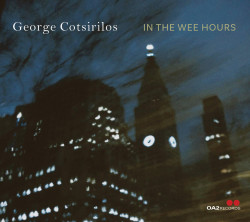
There's something about the middle of the night, the world quiets down, everything softens, and if you're lucky, you can hear a guitar speaking with a voice all its own. That's the space George Cotsirilos steps into with In the Wee Hours, his latest solo album. This isn't a record that tries to impress with flash or volume. It feels private, almost like a conversation you just happened to overhear.
Sure, guitar fans will feel right at home here. But calling it "just for guitar lovers" would miss the mark. Cotsirilos refuses to let his music get boxed in. He reminds me a little of Juan Carmona, someone who honors traditions but never gets stuck in them. Instead of locking into one style, Cotsirilos seems more interested in building his own language, drawing from the precision of classical music, the flexibility of jazz, and a kind of narrative restraint that pulls you in.
That restraint matters. Playing solo guitar is as exposed as it gets, no band to hide behind, nowhere to duck. But Cotsirilos turns that vulnerability into a kind of quiet drama. You start to wonder what stands out more: his impeccable touch, his graceful phrasing, or the way he puts the whole thing together. Honestly, it's all three. They work together, with Cotsirilos sometimes trading a little audacity for cohesion.
He sets out a series of eleven short pieces, and the album flows a lot like a live recital. At first, the tunes are short, maybe a bit tentative, just enough to pull you in. Then, as things go on, the pieces open up, stretching out, offering richer harmonies and more depth. Cotsirilos doesn't rush the process. The music grows naturally, without drawing attention to itself.
You hear hints of 18th- and 19th-century Italian tradition, but he always keeps it fresh. He avoids clichés, and his sound stays rooted in the present, tinged with subtle jazz colors—a surprising chord here, a bit of rhythmic sway there. Out of the eleven tracks, two are his own, and the rest reimagine older tunes. Still, these aren't just arrangements. He rebuilds them, ties them together with a single mood and vision.
That sense of unity comes through in the sound, too. Cotsirilos moves between guitars by José Ram'rez and Alberto Morales, and it gives everything a warm, intimate feel. The line between jazz and classical almost disappears. This isn't just for purists, it speaks to people who drift between genres, players who obsess over tone, listeners who get lost in phrasing.
There's a flip side, though. The album stays so even-keeled that you might wish for a shake-up, a moment where someone throws a chair or lets loose. If you want fireworks, you may not find them here. But for a lot of listeners, that steadiness is the point, a commitment to nuance over showmanship.
It's a little surprising to see this kind of album coming from OA2 Records, a label known for contemporary jazz. Here, the classical influence is front and center, with just the faintest trace of swing. It doesn't try to blend styles so much as quietly redraw boundaries.
Knowing Cotsirilos's history gives the music extra context. Before these solo projects, he played with the San Francisco Nighthawks, alongside jazz mainstays like Eddie Marshall, Paul Nagel, and Robb Fisher. You can still hear that heritage, but it's stripped down now, distilled into something more personal.
In the end, In the Wee Hours feels both intimate and searching, a musician talking to himself and letting us listen in. Everything is deliberate. The recording even draws you in close, so you catch the small stuff, the way the wood resonates, the afterglow of a string fading away.
You can play the album in the background while you're reading. Or you can turn off the lights and really listen, chasing down all the subtleties. For students of the instrument, there's a masterclass in touch and control. For everyone else, there's something rare, a record that speaks quietly, but never once loses its focus or clarity.
Sure, guitar fans will feel right at home here. But calling it "just for guitar lovers" would miss the mark. Cotsirilos refuses to let his music get boxed in. He reminds me a little of Juan Carmona, someone who honors traditions but never gets stuck in them. Instead of locking into one style, Cotsirilos seems more interested in building his own language, drawing from the precision of classical music, the flexibility of jazz, and a kind of narrative restraint that pulls you in.
That restraint matters. Playing solo guitar is as exposed as it gets, no band to hide behind, nowhere to duck. But Cotsirilos turns that vulnerability into a kind of quiet drama. You start to wonder what stands out more: his impeccable touch, his graceful phrasing, or the way he puts the whole thing together. Honestly, it's all three. They work together, with Cotsirilos sometimes trading a little audacity for cohesion.
He sets out a series of eleven short pieces, and the album flows a lot like a live recital. At first, the tunes are short, maybe a bit tentative, just enough to pull you in. Then, as things go on, the pieces open up, stretching out, offering richer harmonies and more depth. Cotsirilos doesn't rush the process. The music grows naturally, without drawing attention to itself.
You hear hints of 18th- and 19th-century Italian tradition, but he always keeps it fresh. He avoids clichés, and his sound stays rooted in the present, tinged with subtle jazz colors—a surprising chord here, a bit of rhythmic sway there. Out of the eleven tracks, two are his own, and the rest reimagine older tunes. Still, these aren't just arrangements. He rebuilds them, ties them together with a single mood and vision.
That sense of unity comes through in the sound, too. Cotsirilos moves between guitars by José Ram'rez and Alberto Morales, and it gives everything a warm, intimate feel. The line between jazz and classical almost disappears. This isn't just for purists, it speaks to people who drift between genres, players who obsess over tone, listeners who get lost in phrasing.
There's a flip side, though. The album stays so even-keeled that you might wish for a shake-up, a moment where someone throws a chair or lets loose. If you want fireworks, you may not find them here. But for a lot of listeners, that steadiness is the point, a commitment to nuance over showmanship.
It's a little surprising to see this kind of album coming from OA2 Records, a label known for contemporary jazz. Here, the classical influence is front and center, with just the faintest trace of swing. It doesn't try to blend styles so much as quietly redraw boundaries.
Knowing Cotsirilos's history gives the music extra context. Before these solo projects, he played with the San Francisco Nighthawks, alongside jazz mainstays like Eddie Marshall, Paul Nagel, and Robb Fisher. You can still hear that heritage, but it's stripped down now, distilled into something more personal.
In the end, In the Wee Hours feels both intimate and searching, a musician talking to himself and letting us listen in. Everything is deliberate. The recording even draws you in close, so you catch the small stuff, the way the wood resonates, the afterglow of a string fading away.
You can play the album in the background while you're reading. Or you can turn off the lights and really listen, chasing down all the subtleties. For students of the instrument, there's a masterclass in touch and control. For everyone else, there's something rare, a record that speaks quietly, but never once loses its focus or clarity.
Soundclips
Other Reviews of
"In the Wee Hours":
Take Effect by Tom Haugen
Making A Scene by Dee Dee McNeil
Bman's Blues Report by Editor
Jazz Weekly by George W. Harris