MUSIC REVIEW BY Marilyn Lester, Nightlife Exchange (NYC)
Style, charm, poise and very serious jazz chops—a few words that begin to sum up singer Libby York. And in one of her all too infrequent visits to NYC, she created a cocoon of vocal delight in the intimate cellar jazz haven, Mezzrow in the Village. For one delicious set (there were two, total), experiencing her artistry helped make the turbulence of our current outside world disappear.
Opening with a swinging "This Time the Dream's on Me" (Harold Arlen, Johnny Mercer), York once again certified that she comes from the school of classic female jazz vocalists whose membership includes Sandy Stewart, Mary Stallings, Cynthia Crane and the late Carols Sloan and Fredette. Beside golden voices, their bond is in words: the lyric. Sure, that feel for jazz is there, the phrasing, the rhythm, vocal control, but beyond that there's a special understanding of what the lyric truly means; they communicate the story with depth. No gimmicks, no vocal gymnastics need apply. Pure storytelling—and isn't that what the music is all about?
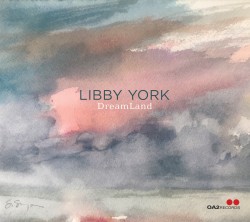
With a wink and a nod, York sang the cheeky, "An Occasional Man," written by Hugh Martin and Ralph Blane for the 1955 film, The Girl Rush. The movie is forgettable, but this tune was picked up by a raft of A-list vocal sisters, with York's fun interpretation among them. The title tune from her most recent album (her fifth), Dreamland, "Hit the Road to Dreamland" (Arlen, Mercer) heard her declare "Only Johnny Mercer could have written these lyrics." Along with her bluesy delivery, sidemen, guitarist Roni Ben-Hur and bassist Martin Wind particularly excelled. These are two first-call virtuosos with a particular synergy with each other and with York. Talk about dreamland. Their artistry in both support of the singer and in special spotlight features was soul-stirring.
One of the notable attributes among jazz artists is that they know upon whose shoulders they stand and are quick to acknowledge that. Citing the late Shirley Horn, from whom she learned "I Just Found Out About Love" (Jimmy McHugh, Harold Adamson), York delivered it with a sense of fun and gusto. For variety, there was the torchy "Something Cool" (Bill Barnes) and the bluesy "Still on the Road" (Earl Brown, Bill Mumy). York closed with the evocative ballad, "For All We Know" (J. Fred Coots, Sam M. Lewis) dedicated to fallen jazz comrade, guitarist Russell Malone, who passed a year ago in August. But like many endings, the delight of Libby York came "all too soon."
Opening with a swinging "This Time the Dream's on Me" (Harold Arlen, Johnny Mercer), York once again certified that she comes from the school of classic female jazz vocalists whose membership includes Sandy Stewart, Mary Stallings, Cynthia Crane and the late Carols Sloan and Fredette. Beside golden voices, their bond is in words: the lyric. Sure, that feel for jazz is there, the phrasing, the rhythm, vocal control, but beyond that there's a special understanding of what the lyric truly means; they communicate the story with depth. No gimmicks, no vocal gymnastics need apply. Pure storytelling—and isn't that what the music is all about?
With a wink and a nod, York sang the cheeky, "An Occasional Man," written by Hugh Martin and Ralph Blane for the 1955 film, The Girl Rush. The movie is forgettable, but this tune was picked up by a raft of A-list vocal sisters, with York's fun interpretation among them. The title tune from her most recent album (her fifth), Dreamland, "Hit the Road to Dreamland" (Arlen, Mercer) heard her declare "Only Johnny Mercer could have written these lyrics." Along with her bluesy delivery, sidemen, guitarist Roni Ben-Hur and bassist Martin Wind particularly excelled. These are two first-call virtuosos with a particular synergy with each other and with York. Talk about dreamland. Their artistry in both support of the singer and in special spotlight features was soul-stirring.
One of the notable attributes among jazz artists is that they know upon whose shoulders they stand and are quick to acknowledge that. Citing the late Shirley Horn, from whom she learned "I Just Found Out About Love" (Jimmy McHugh, Harold Adamson), York delivered it with a sense of fun and gusto. For variety, there was the torchy "Something Cool" (Bill Barnes) and the bluesy "Still on the Road" (Earl Brown, Bill Mumy). York closed with the evocative ballad, "For All We Know" (J. Fred Coots, Sam M. Lewis) dedicated to fallen jazz comrade, guitarist Russell Malone, who passed a year ago in August. But like many endings, the delight of Libby York came "all too soon."
Soundclips
Other Reviews of
"DreamLand":
Wild Mercury Rhythm by C. Michael Bailey
Deep Roots by David McGee
DownBeat by Brian Morton
Take Effect by Tom Haugen
Chicago Jazz by Jeff Cebulski
New York City Jazz Record by Jim Motavalli
The Jazz Page by D. Glenn Daniels
Sound Advice / Talkin' Broadway by Rob Lester
Music Pen Club (Japan) by Keizo Takada
Wild Mercury Rhythm by C. Michael Bailey
JazzTimes by Andrew Gilbert
Gina Loves Jazz (Germany) by Matthias Kirsch
Paris Move by Thierry Docmac
JW Vibe by Jonathan Widran
Jersey Jazz by Joe Lang