MUSIC REVIEW BY Hanna Kay, Cult News (Paris)
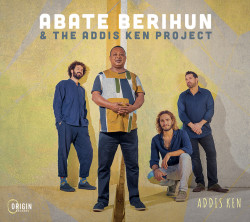
There is something of the sunrise in Addis Ken, of a horizon between the liturgical traditions of the Jews of Ethiopia, jazz, blues and African rhythms. A dialogue between Ethiopian saxophonist and singer Abate Berihun and the trio of Israeli pianist Roy Mor, Addis Ken tells as much a personal story as a collective adventure. Roy Mor looks back for us on this musical encounter where jazz becomes a bridge between cultures and a universal language of freedom and spirituality. In concert on June 2 in Paris for the Sacré Sound Festival.
Your music circulates between Ethiopia, Israel, jazz and African rhythms. Do you see Addis Ken as a musical bridge between cultures?
Absolutely. When I met Abate, we started playing, and we connected through music, but also as people, as friends. Then we created The Addis Ken Project, Abate brought his musical heritage (Ethiopia, his Israeli experience, his jazz influences, afrobeat), and I brought mine (Israel, jazz, Middle Eastern music and many other influences).
When the band became a quartet with David Michaeli on bass and Nitzan Birnbaum on drums, each brought their own musical personality. The band's music has become a kind of bridge between different styles and cultures, especially since most of us are rooted in several "musical continents".
For example, our drummer Nitzan Birnbaum is also a singer and producer, in a register that could be described as pop, while being very active on the free jazz scene with Albert Beger and other musicians. David Michaeli is also the bassist of the contemporary jazz trio SHALOSH. As for me, I am involved in a wide variety of projects: solo piano, trio, quartet, jazz quintet, Middle Eastern music and other influences.
Beyond that, most of the compositions on the album are signed Abate. They are written from traditional Ethiopian scales that we then develop and arrange collectively, sometimes profoundly transforming the original ideas. Some texts come from the Jewish tradition. Added to this is our taste for musical adventure and improvisation, inherited from jazz, while the spirit of the blues hovers over the whole. The result is this fusion that reflects our respective musical tastes and ultimately becomes a true intercultural bridge.
How did you meet Abate Berihun? What immediately brought you together, musically and humanly?
I met Abate Berihun through my brother, the pianist Omri Mor, who had already played with him several times. At a concert, I found myself going on stage to play a song with him, completely out of the blue, just as a duet. It was a very memorable experience for me. From that moment on, I knew I wanted to play with him. We got together to work on music together, and that's when our bond was really created. He taught me Ethiopian scales and I taught him some notions related to jazz standards and harmony. Beyond our musical connection based on deep listening and mutual curiosity, I learned a lot from his way of being: his ability to accept any musical situation as it arises and to transform it into something positive.
Is there a political dimension to your music, even when it's devoid of lyrics?
If there is one, it expresses itself through the very nature of our music, which mixes different cultures, different eras and different horizons, bringing together elements of the sacred and freedom. While the cultural depth of this music is rooted in the ancestral Ethiopian, African and African-American Jewish traditions of jazz, its ultimate spirit and message remain universal.
Ethiopian liturgical music seems to be very present in this album. What does spirituality bring you in your way of improvisation?
It gives a context to improvisation. Improvisation then becomes a vehicle in the service of a higher intention. It also reinforces the demand for truth when improvisation. It's always important, whatever the musical context: it's an ideal that we constantly strive towards, even if we don't always achieve it.
Did you want this album to tell a story of exile, transmission and identity?
I think it's something that comes through very clearly in the tracks on the album, even if it was probably built unconsciously, rather than as an intention that was present from the start. A multitude of identities coexist in this album. Musical identities: contemporary jazz, traditional Ethiopian music, free jazz, afrobeat, ethio-jazz, Latin music, soul and R&B in Rudi's voice, a bit of funk, asymmetrical measures, etc. There are also geographical identities: Ethiopia, Israel, America, Africa and the Middle East. And cultural and spiritual identities: the Psalms of the Hebrew Bible, the ancient tradition of the ge'ez of the Beta Israel and Ethiopian Christianity, African-American music and different forms of prayer. As far as transmission is concerned, it is above all the story of Abate: his multiple identities, his personal experience of exile and the transmission of his cultural heritage. He is Abate as an individual, but through this work, he also becomes the symbol of something larger than himself.
Some moments on the album seem almost cinematic. Do you imagine images or memories when composing?
I learned something from my brother Omri, especially when I play solo piano pieces: to try not to think directly about the music itself, but rather about what is outside of it. Imagine images, memories, movie scenes or different situations. These images end up being transmitted naturally in the playing and the interpretation. The idea is that they allow both the musician and the audience to go on a journey, rather than staying focused on the technical aspects: hand movements, harmony or structure.
What are your main jazz influences and which musicians have shaped your musical language the most?
There are so many of them that it is difficult to list them all spontaneously. To mention just a few, knowing that I will forget many: Oscar Peterson, John Coltrane, Brad Mehldau, Beethoven, Bach, Blue Mitchell, Wynton Kelly, Metallica, The Prodigy, Bud Powell, Pat Metheny, Herbie Hancock, and many more.
Why did you choose the name "Addis Ken"? What does it symbolize for you?
"Addis Ken" means "New Day" in Amharic. It was Abate who came up with the name. When we started the project, he was coming out of a particularly difficult five-year period during which he played very little and rarely made music, following a complicated divorce and other personal upheavals. So the name was a source of optimism. He symbolized the new creative period that was opening up before him, but also before all of us. And he was absolutely right. In hindsight, the name also evokes hope, optimism, light, sunrise, new beginnings, time, tradition and renewal. We hope that our music expresses all of this.
Translated from French
Your music circulates between Ethiopia, Israel, jazz and African rhythms. Do you see Addis Ken as a musical bridge between cultures?
Absolutely. When I met Abate, we started playing, and we connected through music, but also as people, as friends. Then we created The Addis Ken Project, Abate brought his musical heritage (Ethiopia, his Israeli experience, his jazz influences, afrobeat), and I brought mine (Israel, jazz, Middle Eastern music and many other influences).
When the band became a quartet with David Michaeli on bass and Nitzan Birnbaum on drums, each brought their own musical personality. The band's music has become a kind of bridge between different styles and cultures, especially since most of us are rooted in several "musical continents".
For example, our drummer Nitzan Birnbaum is also a singer and producer, in a register that could be described as pop, while being very active on the free jazz scene with Albert Beger and other musicians. David Michaeli is also the bassist of the contemporary jazz trio SHALOSH. As for me, I am involved in a wide variety of projects: solo piano, trio, quartet, jazz quintet, Middle Eastern music and other influences.
Beyond that, most of the compositions on the album are signed Abate. They are written from traditional Ethiopian scales that we then develop and arrange collectively, sometimes profoundly transforming the original ideas. Some texts come from the Jewish tradition. Added to this is our taste for musical adventure and improvisation, inherited from jazz, while the spirit of the blues hovers over the whole. The result is this fusion that reflects our respective musical tastes and ultimately becomes a true intercultural bridge.
How did you meet Abate Berihun? What immediately brought you together, musically and humanly?
I met Abate Berihun through my brother, the pianist Omri Mor, who had already played with him several times. At a concert, I found myself going on stage to play a song with him, completely out of the blue, just as a duet. It was a very memorable experience for me. From that moment on, I knew I wanted to play with him. We got together to work on music together, and that's when our bond was really created. He taught me Ethiopian scales and I taught him some notions related to jazz standards and harmony. Beyond our musical connection based on deep listening and mutual curiosity, I learned a lot from his way of being: his ability to accept any musical situation as it arises and to transform it into something positive.
Is there a political dimension to your music, even when it's devoid of lyrics?
If there is one, it expresses itself through the very nature of our music, which mixes different cultures, different eras and different horizons, bringing together elements of the sacred and freedom. While the cultural depth of this music is rooted in the ancestral Ethiopian, African and African-American Jewish traditions of jazz, its ultimate spirit and message remain universal.
Ethiopian liturgical music seems to be very present in this album. What does spirituality bring you in your way of improvisation?
It gives a context to improvisation. Improvisation then becomes a vehicle in the service of a higher intention. It also reinforces the demand for truth when improvisation. It's always important, whatever the musical context: it's an ideal that we constantly strive towards, even if we don't always achieve it.
Did you want this album to tell a story of exile, transmission and identity?
I think it's something that comes through very clearly in the tracks on the album, even if it was probably built unconsciously, rather than as an intention that was present from the start. A multitude of identities coexist in this album. Musical identities: contemporary jazz, traditional Ethiopian music, free jazz, afrobeat, ethio-jazz, Latin music, soul and R&B in Rudi's voice, a bit of funk, asymmetrical measures, etc. There are also geographical identities: Ethiopia, Israel, America, Africa and the Middle East. And cultural and spiritual identities: the Psalms of the Hebrew Bible, the ancient tradition of the ge'ez of the Beta Israel and Ethiopian Christianity, African-American music and different forms of prayer. As far as transmission is concerned, it is above all the story of Abate: his multiple identities, his personal experience of exile and the transmission of his cultural heritage. He is Abate as an individual, but through this work, he also becomes the symbol of something larger than himself.
Some moments on the album seem almost cinematic. Do you imagine images or memories when composing?
I learned something from my brother Omri, especially when I play solo piano pieces: to try not to think directly about the music itself, but rather about what is outside of it. Imagine images, memories, movie scenes or different situations. These images end up being transmitted naturally in the playing and the interpretation. The idea is that they allow both the musician and the audience to go on a journey, rather than staying focused on the technical aspects: hand movements, harmony or structure.
What are your main jazz influences and which musicians have shaped your musical language the most?
There are so many of them that it is difficult to list them all spontaneously. To mention just a few, knowing that I will forget many: Oscar Peterson, John Coltrane, Brad Mehldau, Beethoven, Bach, Blue Mitchell, Wynton Kelly, Metallica, The Prodigy, Bud Powell, Pat Metheny, Herbie Hancock, and many more.
Why did you choose the name "Addis Ken"? What does it symbolize for you?
"Addis Ken" means "New Day" in Amharic. It was Abate who came up with the name. When we started the project, he was coming out of a particularly difficult five-year period during which he played very little and rarely made music, following a complicated divorce and other personal upheavals. So the name was a source of optimism. He symbolized the new creative period that was opening up before him, but also before all of us. And he was absolutely right. In hindsight, the name also evokes hope, optimism, light, sunrise, new beginnings, time, tradition and renewal. We hope that our music expresses all of this.
Translated from French
Soundclips
Other Reviews of
"Addis Ken":
Songlines (UK) by Kwanele Sosibo
Take Effect by Tom Haugen
Tenoua (Paris) by Antoine Kauffer
Making A Scene by Dee Dee McNeil
Rudolf Radnai by Budapest
Bman's Blues Report by Editor
Le Quotidien (Senegal) by Malick Gaye
Step Tempest by Richard Kamins
UK Vibe by Mike Gates
Jazz Weekly by George Harris
Paris Move by Thierry De Clemensat