MUSIC REVIEW BY Antoine Kauffer, Tenoua (Paris)
Sacré Sound Festival: Afro‐Jewish blues resonates in Paris
An ambassador of contemporary free jazz and its intertwining with Ethiopian Jewish traditions, Abate Berihun and The Addis Ken Project, which he leads, caused a sensation in Paris during the Sacré Sound Festival. Between Jewish sacred music from the Horn of Africa and complicit virtuosity, a look back at the singular career of a Jewish, African and Israeli jazzman.
Life is not a smooth ride for Abate Berihun and the three other Israeli musicians who make up The Addis Ken Project. Barely off the plane - back from the prestigious Saint‐Louis International Jazz Festival in Senegal - here they are in Paris for the French premiere of their album. This, on the occasion of the Sacré Sound Festival.
"A first in the capital for the quartet, but certainly not for each of its members," says Laurence Haziza, director of the festival, who initiated the invitation.
Because The Addis Ken is a composite intergenerational ensemble formed by two accomplished musicians (Abate Berihun, vocalist and instrumentalist who is used to touring with the greatest of the Ethiopian scene, and Roy Mor, manager and pianist who has long lived in New York) and two young talents (David Mihaeli on double bass, Nitzan Birnbaum on drums).
The project in question (Addis Ken means "New Day" in Amharic, one of the five main languages of Ethiopia) mixes several universes: the ancestral prayers of the Beta Israel community of Ethiopia [formerly known as falasha], the modern flights of free jazz, contemporary Afrobeat and African‐American blues.
An encounter that marries the plural identity of the Sacré Sound festival and its programming: "Here, surprises become obvious. Music and spirituality juggle with identities - to fight against exclusion, racism, anti-Semitism. Because, we must remember again, deep down, we are only one," says its founder.
A singular career
At the heart of this quartet, which is original to say the least, is the figure of Abate. Crack of the woods - "the first person he kissed was a saxophone," jokes his accomplice Roy, the Ethiopian native trained in the Addis Ababa military band in the eighties, under Mengistu Haile Mariam. The starting point of a battered story, which nevertheless allowed Abate to tour with the leading figures of Ethio-jazz (among others, Mulatu Astatke and Mahmoud Ahmed), a musical genre that originated in Ethiopia at the end of the fifties and was popularized in the following decades among the Western clientele of the hotels of its capital.
Abate performed there regularly for several years, before making aliyah in 1999. "Now I've been living in Israel for 26 years. It wasn't always easy," says the artist, in Hebrew and in a laconic way.
A discrepancy illustrated by this aberrant retort from the head of a reception center for immigrants, shortly after the instrumentalist arrived in the country: "But where did you learn to play this instrument? So saxophones are found in Ethiopia?"
Abate's aliyah put his life as a musician on hold for a while: the artist with a clear timbre began as a security guard in a factory and then as a dishwasher in a restaurant - the chemicals burned his fingers to the point of jeopardizing any return to music. Personal upheavals follow one another without hindering the inner fire of the multi‐instrumentalist.
They also fertilize the desire to keep alive the liturgical traditions of his Jewish community in Ethiopia and to explore its intersections with jazz music. Because in addition to the great masters of Ethio-jazz, there is for Abate this major inspiration: John Coltrane. An African‐American saxophone giant, who conceived his own music "as a spirituality"!
And then in 2018, this meeting with Roy Mor. "A form of serendipity as much as obvious" insists the pianist, who sees in his Ethiopian accomplice a genius with untapped talent. "We quickly introduced two other very young musicians to form a real creative jazz quartet." At the heart of the musical proposal: sharing, mixing, improvisation and the safeguarding of often little-known Jewish traditions.
Judaized and contemporary Ethio-jazz
For the premiere of the Addis Ken Project in France, the auditorium of the Museum of Jewish Art and History in Paris is packed. Nearly 200 curious people came to attend the concert. Among them, as many informed music lovers as intrigued neophytes; figures from the local music scene, regulars of the museum, and of course all those convinced of the rapprochements initiated by the Sacré Sound Festival.
In the vaulted basement of the Hôtel de Saint‐Aignan, the notes of the quartet gain a new depth. As an opening, "Tefilla" ("Prayer"), makes the Ge'ez language resonate. This has been transmitted orally for nearly two millennia and is used in the liturgy of the Ethiopian Orthodox Church, the Eritrean Orthodox Church and the Beta Israel Jewish community. "This language is gradually dying out. What you have just heard is a daily prayer; a prayer of peace too," pleaded Roy Mor.
Then comes "Behatitu Kadus Kadus" ("You alone are holy"), which opens with a recording of Kessim - these Ethiopian Jewish priests - singing in a form of dialogue. Then follow "Des Des" ("happy" in Amharic) and "Geshem" ("rain" in Hebrew) in the form of a catchy ballad. The whole punctuated by the complicit smiles and the mutual, ritual astonishments of the four musicians.
Scattered throughout the concert, the solos highlight the tonal richness of each of the instrumentalists. Like "One for Roy", composed by Michaeli. "He's getting ready for the worst: getting married," comments the pianist, to whom the title is dedicated, with humor.
Improvisations are omnipresent in the tracks that follow one another. They exploit the raw nature of the sounds (the screeching of the percussion timpani, the plucking of the double bass strings) to tune with the ancestral dimension of the prayers interpreted vocally by Abate. His guiding voice, the instrumentalists respond to it. Finally (or almost), the track "Jerusalem", the hometown of some members of the group, offers an exuberant and festive synthesis to the concert, while retaining its sacred music dimension.
A multifaceted concert
But already the applause, which was numerous, called for an encore. It will take the form of an invitation: the artist Ma Sané - a singer of mbalax, a Senegalese rhythm from the Serer religious musical tradition of West Africa, enters the stage. In a vocal duet with Abate, Amharic and Wolof marry, complement each other and reinvent the jazz repertoire as well as that of sacred music on stage.
Surprise creates a spark and arouses curiosity. In a suffering political‐cultural landscape, these games of back and forth and plural interpenetrations between Judaism and the African continent generate fertile creations. A new experience for Roy: "Our solos can go in many unexpected directions. To be honest, before my association with Abate, I didn't perform liturgical music. »
He concludes, with reverence for the master: "If I have to define our style, it is a deeply spiritual Afro-Jewish blues: a musicality shaped by centuries of migration, memory and devotion, which is expressed by the figure of Abate and finds a new expression with our quartet."
Let's bet that the visit to France of Abate Berihun and the Addis Ken Project will allow cultural Ethiopia and its diaspora to be put back in the spotlight more widely - from the author Maaza Mengiste and her documentary novel The Phantom King to the American visual artist Julie Mehretu, largely inspired by her childhood in Addis Ababa, via exile at the heart of the work of the writer Dinaw Mengestu. And the country's long history with Judaism.
Translated from French
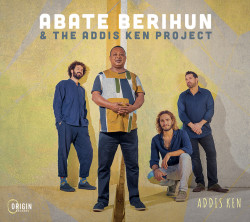
An ambassador of contemporary free jazz and its intertwining with Ethiopian Jewish traditions, Abate Berihun and The Addis Ken Project, which he leads, caused a sensation in Paris during the Sacré Sound Festival. Between Jewish sacred music from the Horn of Africa and complicit virtuosity, a look back at the singular career of a Jewish, African and Israeli jazzman.
Life is not a smooth ride for Abate Berihun and the three other Israeli musicians who make up The Addis Ken Project. Barely off the plane - back from the prestigious Saint‐Louis International Jazz Festival in Senegal - here they are in Paris for the French premiere of their album. This, on the occasion of the Sacré Sound Festival.
"A first in the capital for the quartet, but certainly not for each of its members," says Laurence Haziza, director of the festival, who initiated the invitation.
Because The Addis Ken is a composite intergenerational ensemble formed by two accomplished musicians (Abate Berihun, vocalist and instrumentalist who is used to touring with the greatest of the Ethiopian scene, and Roy Mor, manager and pianist who has long lived in New York) and two young talents (David Mihaeli on double bass, Nitzan Birnbaum on drums).
The project in question (Addis Ken means "New Day" in Amharic, one of the five main languages of Ethiopia) mixes several universes: the ancestral prayers of the Beta Israel community of Ethiopia [formerly known as falasha], the modern flights of free jazz, contemporary Afrobeat and African‐American blues.
An encounter that marries the plural identity of the Sacré Sound festival and its programming: "Here, surprises become obvious. Music and spirituality juggle with identities - to fight against exclusion, racism, anti-Semitism. Because, we must remember again, deep down, we are only one," says its founder.
A singular career
At the heart of this quartet, which is original to say the least, is the figure of Abate. Crack of the woods - "the first person he kissed was a saxophone," jokes his accomplice Roy, the Ethiopian native trained in the Addis Ababa military band in the eighties, under Mengistu Haile Mariam. The starting point of a battered story, which nevertheless allowed Abate to tour with the leading figures of Ethio-jazz (among others, Mulatu Astatke and Mahmoud Ahmed), a musical genre that originated in Ethiopia at the end of the fifties and was popularized in the following decades among the Western clientele of the hotels of its capital.
Abate performed there regularly for several years, before making aliyah in 1999. "Now I've been living in Israel for 26 years. It wasn't always easy," says the artist, in Hebrew and in a laconic way.
A discrepancy illustrated by this aberrant retort from the head of a reception center for immigrants, shortly after the instrumentalist arrived in the country: "But where did you learn to play this instrument? So saxophones are found in Ethiopia?"
Abate's aliyah put his life as a musician on hold for a while: the artist with a clear timbre began as a security guard in a factory and then as a dishwasher in a restaurant - the chemicals burned his fingers to the point of jeopardizing any return to music. Personal upheavals follow one another without hindering the inner fire of the multi‐instrumentalist.
They also fertilize the desire to keep alive the liturgical traditions of his Jewish community in Ethiopia and to explore its intersections with jazz music. Because in addition to the great masters of Ethio-jazz, there is for Abate this major inspiration: John Coltrane. An African‐American saxophone giant, who conceived his own music "as a spirituality"!
And then in 2018, this meeting with Roy Mor. "A form of serendipity as much as obvious" insists the pianist, who sees in his Ethiopian accomplice a genius with untapped talent. "We quickly introduced two other very young musicians to form a real creative jazz quartet." At the heart of the musical proposal: sharing, mixing, improvisation and the safeguarding of often little-known Jewish traditions.
Judaized and contemporary Ethio-jazz
For the premiere of the Addis Ken Project in France, the auditorium of the Museum of Jewish Art and History in Paris is packed. Nearly 200 curious people came to attend the concert. Among them, as many informed music lovers as intrigued neophytes; figures from the local music scene, regulars of the museum, and of course all those convinced of the rapprochements initiated by the Sacré Sound Festival.
In the vaulted basement of the Hôtel de Saint‐Aignan, the notes of the quartet gain a new depth. As an opening, "Tefilla" ("Prayer"), makes the Ge'ez language resonate. This has been transmitted orally for nearly two millennia and is used in the liturgy of the Ethiopian Orthodox Church, the Eritrean Orthodox Church and the Beta Israel Jewish community. "This language is gradually dying out. What you have just heard is a daily prayer; a prayer of peace too," pleaded Roy Mor.
Then comes "Behatitu Kadus Kadus" ("You alone are holy"), which opens with a recording of Kessim - these Ethiopian Jewish priests - singing in a form of dialogue. Then follow "Des Des" ("happy" in Amharic) and "Geshem" ("rain" in Hebrew) in the form of a catchy ballad. The whole punctuated by the complicit smiles and the mutual, ritual astonishments of the four musicians.
Scattered throughout the concert, the solos highlight the tonal richness of each of the instrumentalists. Like "One for Roy", composed by Michaeli. "He's getting ready for the worst: getting married," comments the pianist, to whom the title is dedicated, with humor.
Improvisations are omnipresent in the tracks that follow one another. They exploit the raw nature of the sounds (the screeching of the percussion timpani, the plucking of the double bass strings) to tune with the ancestral dimension of the prayers interpreted vocally by Abate. His guiding voice, the instrumentalists respond to it. Finally (or almost), the track "Jerusalem", the hometown of some members of the group, offers an exuberant and festive synthesis to the concert, while retaining its sacred music dimension.
A multifaceted concert
But already the applause, which was numerous, called for an encore. It will take the form of an invitation: the artist Ma Sané - a singer of mbalax, a Senegalese rhythm from the Serer religious musical tradition of West Africa, enters the stage. In a vocal duet with Abate, Amharic and Wolof marry, complement each other and reinvent the jazz repertoire as well as that of sacred music on stage.
Surprise creates a spark and arouses curiosity. In a suffering political‐cultural landscape, these games of back and forth and plural interpenetrations between Judaism and the African continent generate fertile creations. A new experience for Roy: "Our solos can go in many unexpected directions. To be honest, before my association with Abate, I didn't perform liturgical music. »
He concludes, with reverence for the master: "If I have to define our style, it is a deeply spiritual Afro-Jewish blues: a musicality shaped by centuries of migration, memory and devotion, which is expressed by the figure of Abate and finds a new expression with our quartet."
Let's bet that the visit to France of Abate Berihun and the Addis Ken Project will allow cultural Ethiopia and its diaspora to be put back in the spotlight more widely - from the author Maaza Mengiste and her documentary novel The Phantom King to the American visual artist Julie Mehretu, largely inspired by her childhood in Addis Ababa, via exile at the heart of the work of the writer Dinaw Mengestu. And the country's long history with Judaism.
Translated from French
Soundclips
Other Reviews of
"Addis Ken":
Songlines (UK) by Kwanele Sosibo
Take Effect by Tom Haugen
Making A Scene by Dee Dee McNeil
Cult News (Paris) by Hanna Kay
Rudolf Radnai by Budapest
Bman's Blues Report by Editor
Le Quotidien (Senegal) by Malick Gaye
Step Tempest by Richard Kamins
UK Vibe by Mike Gates
Jazz Weekly by George Harris
Paris Move by Thierry De Clemensat